

How can academics use large language models (LLMs) responsibly without compromising originality, rigor, or trust? This workshop brings together perspectives from dissertation research, manuscript preparation, scholarly publishing, and mathematics to explore how LLMs are changing academic writing. Speakers will discuss how AI tools can support learning, critical thinking, innovation, and more efficient writing processes, while also addressing risks such as fabricated references, plagiarism, bias, authorship concerns, and low-quality AI-generated text. Participants will leave with a clearer understanding of how to engage with AI tools ethically, methodologically, and confidently while preserving credibility, accountability, and research integrity.
Find the program, the abstracts of the talks and the profiles of the speakers bellow.
Program
Abstracts
Daniel Edmund O’Leary – AI Use and Learning, Innovation, Critical Thinking, 30-70 Rule and AI Slop in Dissertations
This discussion will build off O’Leary (2023) and investigate an emerging set of issues related to using AI in the development of dissertations. Tentatively, I expect to address several emerging issues in dissertation research, including
Antonija Mijatović – Responsible Use of LLMs during Manuscript Preparation
Large language models (LLMs) have become integrated into academic research and scientific writing. They help with literature search, drafting, language editing, and manuscript preparation. However, their use also raises ethical, methodological, and legal concerns. These include hallucinated information, fabricated references, plagiarism, and bias. This presentation summarizes practical recommendations for the responsible use of LLMs during manuscript preparation, based on current publishing guidelines. We discuss good practices for verifying AI-generated content, emphasising the importance of human oversight in all stages of scientific writing.
Ana Marušić – Challenges of Artificial Intelligence in Scientific Publishing
Artificial intelligence (AI) is rapidly transforming scholarly publishing, creating both opportunities and significant challenges for publishers, editors, and researchers. My presentation examines the major risks posed by AI to the publishing ecosystem and explores emerging strategies to safeguard trust in scholarly communication. AI raises concerns about research integrity, including AI-assisted plagiarism, fabricated or manipulated citations, authorship disputes, and the proliferation of low-quality or fraudulent manuscripts generated by paper mills. The presentation will discuss how publishers, journals, and research organizations are adapting policies and technologies to preserve research integrity while leveraging the benefits of AI to maintain credibility, accountability, and public trust in an increasingly AI-mediated research landscape
Peter Pfaffelhuber – The Special Role of Mathematics for LLMs
In June 2026, an international group of mathematicians published the “Leiden Declaration on Artificial Intelligence and Mathematics”. As expected, it asks individual researchers to disclose their use of AI and to remain responsible for their work. More strikingly, it also addresses funders, policymakers, and AI companies — demanding regulation and that industry respect the discipline’s standards. I argue that this unusual reach follows from a small but fast-growing branch of mathematics creating computer-checkable proofs using the Lean Theorem prover (a programming language). This tool provides a perfect source of verifiable reward for training reasoning models by reinforcement learning.
The same computer-checkable proofs may reshape responsible AI use in mathematical writing. Elsewhere, the writing merely reports the science, so AI can be restricted to language. In mathematics the proof is the science, so “writing assistance” cannot be clearly separated from “doing mathematics” — and the danger is not about style but correctness. Mathematics is unusual in possessing, at least in principle, a perfect check of its own — Lean-checkable formalization. In practice, formalization of research-level results is still rare and too time-consuming to apply on a broader scale. Responsible use, for now, begins not with restricting AI to language but with admitting that the usual cheap signals of trust no longer hold.
Profiles
Daniel Edmund O’Leary (ORCiD: 0000-0002-5240-9516)

Professor O’Leary focuses on artificial intelligence, emerging technologies, and text mining. He is the former editor of IEEE Intelligent Systems, the Journal of Organizational Computing and Electronic Commerce, and the Journal of Emerging Technologies in Accounting, and is the current editor of Intelligent Systems in Accounting, Finance and Management. Dan was named a Fulbright Research Scholar for 2021–2022 in France at the University of Strasbourg, in computer science and artificial intelligence. A co-authored paper received the Association for Information Systems (AIS) Paul Gray Award for “Most Thought-Provoking Paper” in 2021. He has been listed among the University of Arizona’s top information systems researchers, ranked by H-index, in each ranking since 2017. In 2023, Professor O’Leary was elected a Senior Member of the Association for the Advancement of Artificial Intelligence. In 2025, he was named an Association for Information Systems (AIS) Fellow and an IFIP Fellow. Professor O’Leary is listed in Stanford’s list of the “Top 100000 Scientists” based on citations and publications. Dan was named a UiPath Visionary Educator in Robotic Process Automation (RPA) in 2021 and was named the SET (Strategic and Emerging Technologies Section of the American Accounting Association) Outstanding Educator. He was also named an AIS Distinguished Member and received an AIS Award for Innovation in Teaching. In 2023, Dan received the Mark Chain/Deloitte Innovation in Graduate Teaching Award for his course in innovation and AI, and in 2024, he received the George Krull/Grant Thornton EDGE in Teaching Award for his development of a case in analytics. In 2024, he was named a Qlik Educator Ambassador. In 2026, O’Leary received an AIS Innovation in Teaching Award. He has received several research grants, including an iORB–Robotic Process Automation grant, KPMG’s KARP Award for Data and Analytics–Non-Traditional Measures, KPMG’s International Business Information Systems Program Grant, an NSA Grant (MKIDS), and a DHS grant on security.
Antonija Mijatović (ORCID: 0000-0003-1733-582X)
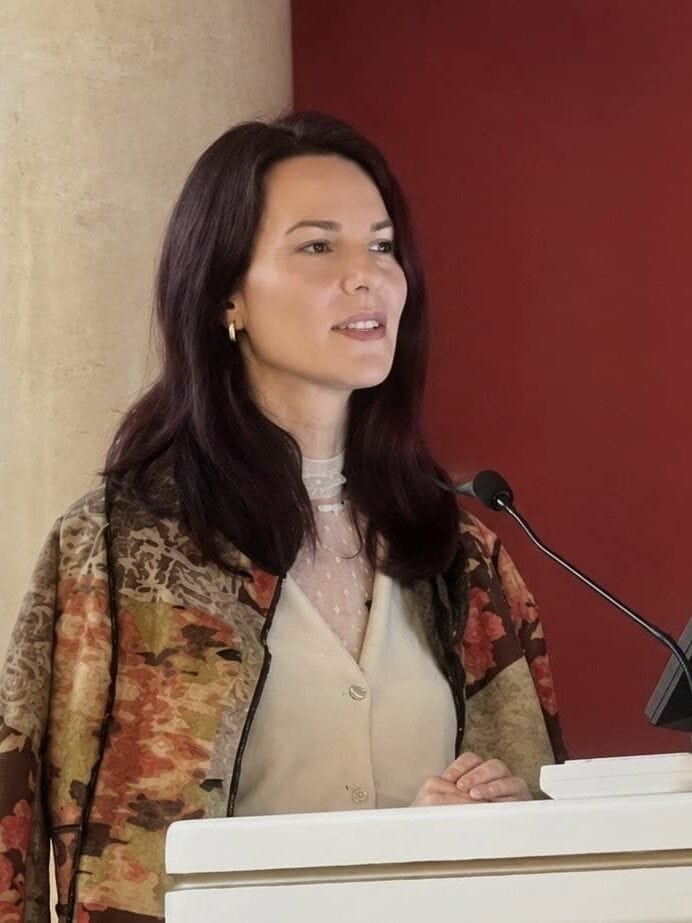
Antonija Mijatović is a postdoctoral researcher at the University of Split School of Medicine. With a background in biophysics and professional experience in the IT sector, her research focuses on research integrity and big data analysis methods. Her recent work explores the responsible use of artificial intelligence, ethics review processes, and the impact of digital technologies on research and higher education.
Ana Marušić (ORCiD: 0000-0001-6272-0917)

Ana Marušić is Professor of Anatomy, Chair of the Department of Research in Biomedicine and Health, and Head of the Center for Evidence-based Medicine at the University of Split School of Medicine. Her research interests include evidence-based medicine and research integrity. She has published over 400 articles in peer-reviewed journals and was heavily involved with creating the policy of mandatory registration of clinical trials in public registries which helped change the legal regulation of clinical trials worldwide. She has participated in several EU projects related to medicine, research integrity, ethics and reproducibility. Prof. Marušić is the founder of Cochrane Croatia and also serves on the Advisory Board of the EQUATOR Network. She is currently the Editor-in-Chief of ST-OPEN, an overlay journal of the University of Split. She was the president of several editorial organizations: EASE, CSE, and WAME. She serves on the Council of the Committee on Publication Ethics (COPE), and as the president of The Embassy Foundation. She is also the founding member of the Croatian Reproducibility and Integrity Network, CroRIN.
Peter Pfaffelhuber (ORCiD: 0000-0002-6421-5460)

Peter Pfaffelhuber is a professor of probability theory and modeling in the life sciences at the University of Freiburg, Germany, where he also directs the Freiburg Center for Data Analysis, Modeling and AI. His research ranges from mathematical population genetics — with applications in forensic genetics — to the modeling of cellular processes and neuroscience. For the past three years he has actively contributed to Mathlib, the library of computer-checked proofs for the Lean interactive theorem prover. Within the Collaborative Research Center 1597 Small Data, he works on quantifying uncertainty in classification. He has a strong interest in science communication.
Institute of Medical Biometry and Statistics,
Faculty of Medicine and Medical Center –
University of Freiburg