How can methods researchers and domain experts build strong, lasting collaborations instead of parallel silos?
That was the central theme at a recent event hosted by the Freiburg Institute for Advanced Studies (FRIAS) together with several Collaborative Research Centres (CRCs), including CRC 1597 Small Data.
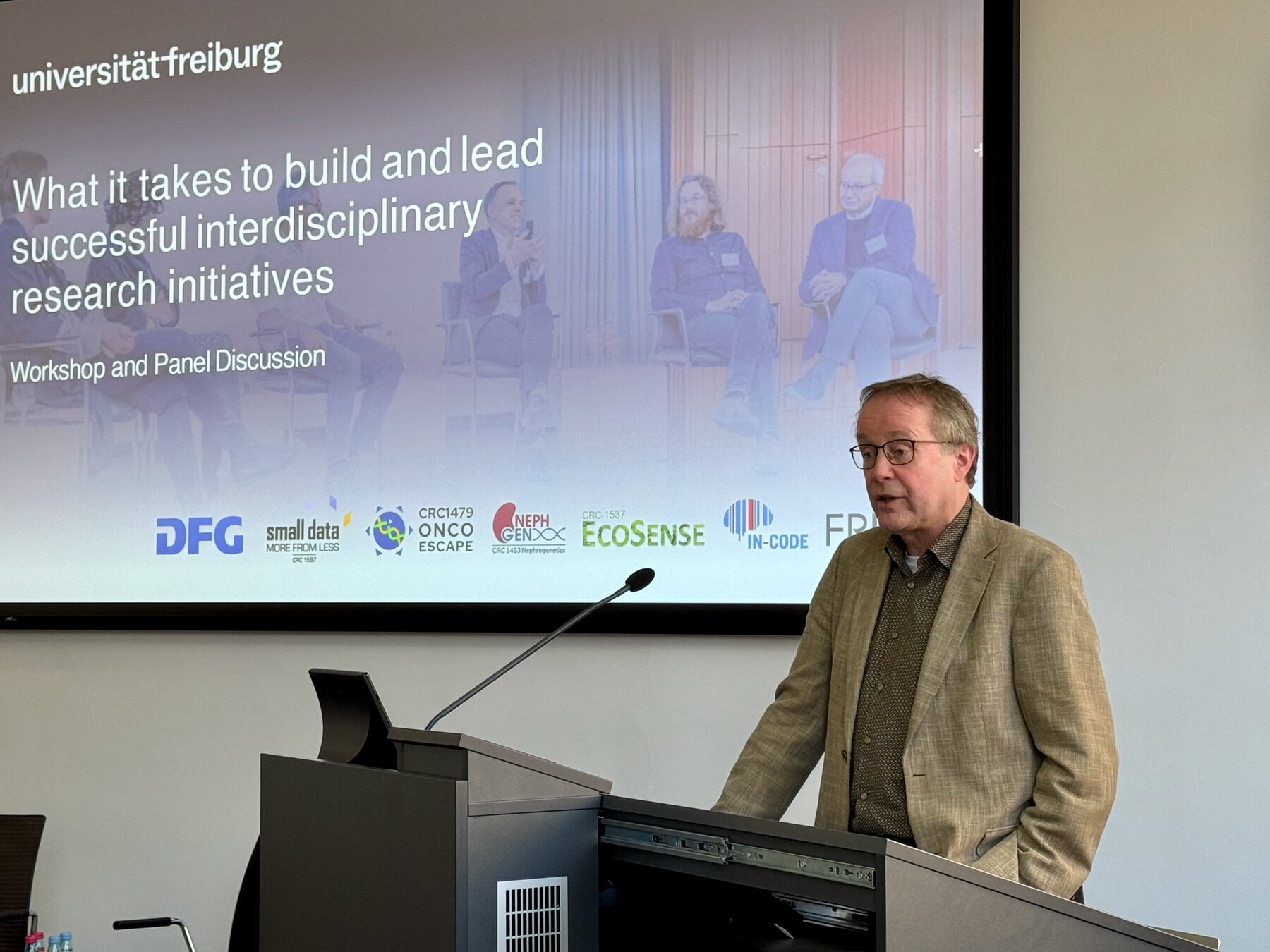
After opening remarks by Ralf von den Hoff (Executive Director, FRIAS), speakers from multiple CRCs shared practical lessons from their own interdisciplinary consortia. Across very different scientific contexts, one message was consistent: successful collaboration does not happen automatically. It must be structured, supported, and continuously maintained.
Harald Binder (CRC 1597 Small Data) emphasized the need for clearly defined roles and expectations within collaborative projects. Rather than forcing a single technical vocabulary too early, he described a model in which teams first work in their own disciplinary language, then align in plenary settings. He also highlighted how recurring exchange can uncover structural gaps, such as data engineering needs that no one discipline can solve alone.
Anna Köttgen (CRC 1453 NephroGenetics) presented a matrix-style consortium structure centered on focused themes, helping teams go deep while reducing interdisciplinary misunderstandings. She underlined the value of early onboarding measures: introducing clinical context to non-clinical researchers, enabling peer-led lab tours, and creating regular informal spaces where early-career researchers can connect independently of senior leadership.
Marlene Bartos (CRC/TRR 384 IN-CODE) addressed the challenge of distributed collaboration. Coordinating across locations and schedules is demanding, but she showed how consistent formats such as progress reports, retreats, and workshops can sustain momentum. Her key point: building a real community makes scientific coordination more resilient.
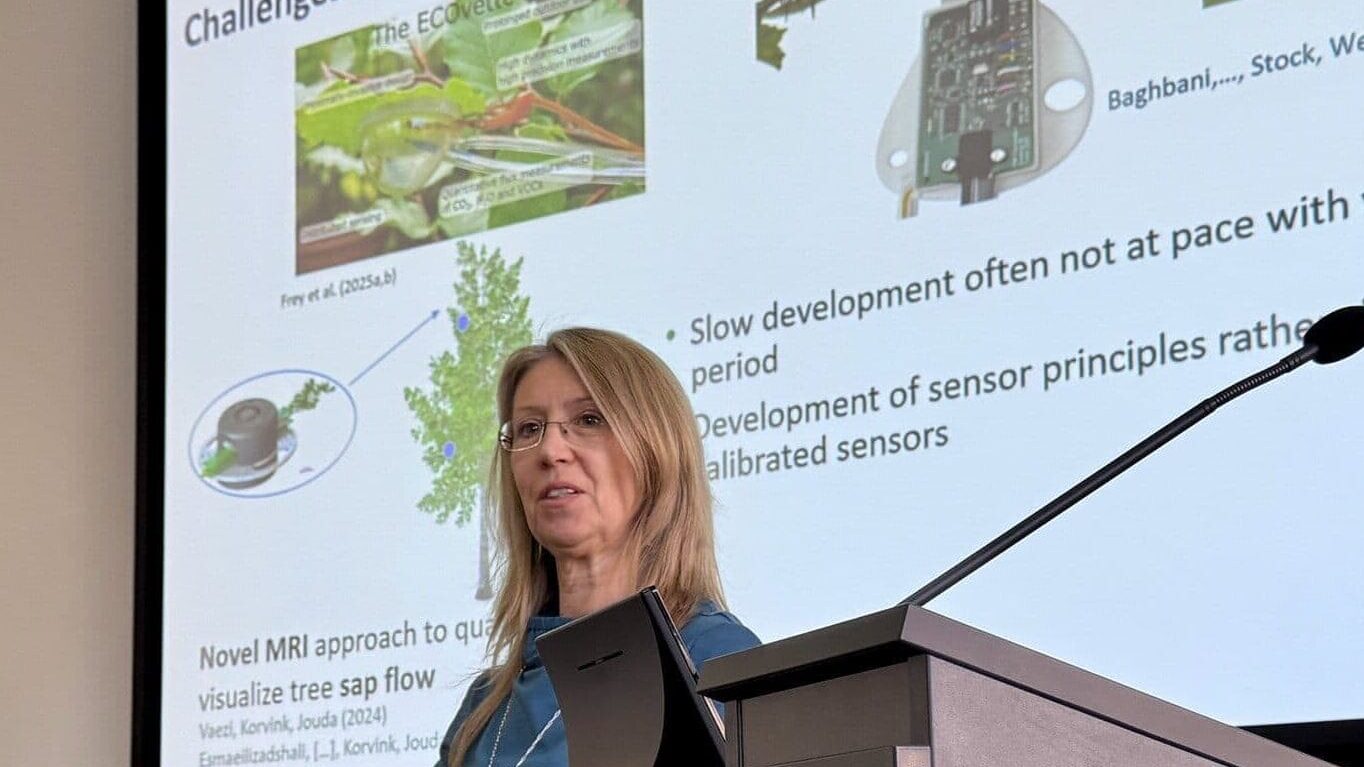
Christiane Werner (CRC 1537 EcoSense) reflected on the complexity of field-based interdisciplinary work. She noted that even when technologies function in controlled settings, implementation in real environments can be more complex than realised. Her lessons learned included reducing jargon, building conceptual understanding early, and creating joint practical experiences, such as shared field work and rotations.
Robert Zeiser (CRC 1497 OncoEscape) spoke about continuity and adaptability, including how consortia can respond when key personnel changes occur. He highlighted tandem project models that pair complementary expertise (for example, clinician scientists and basic researchers), with regular cross-disciplinary discussions to improve research planning.
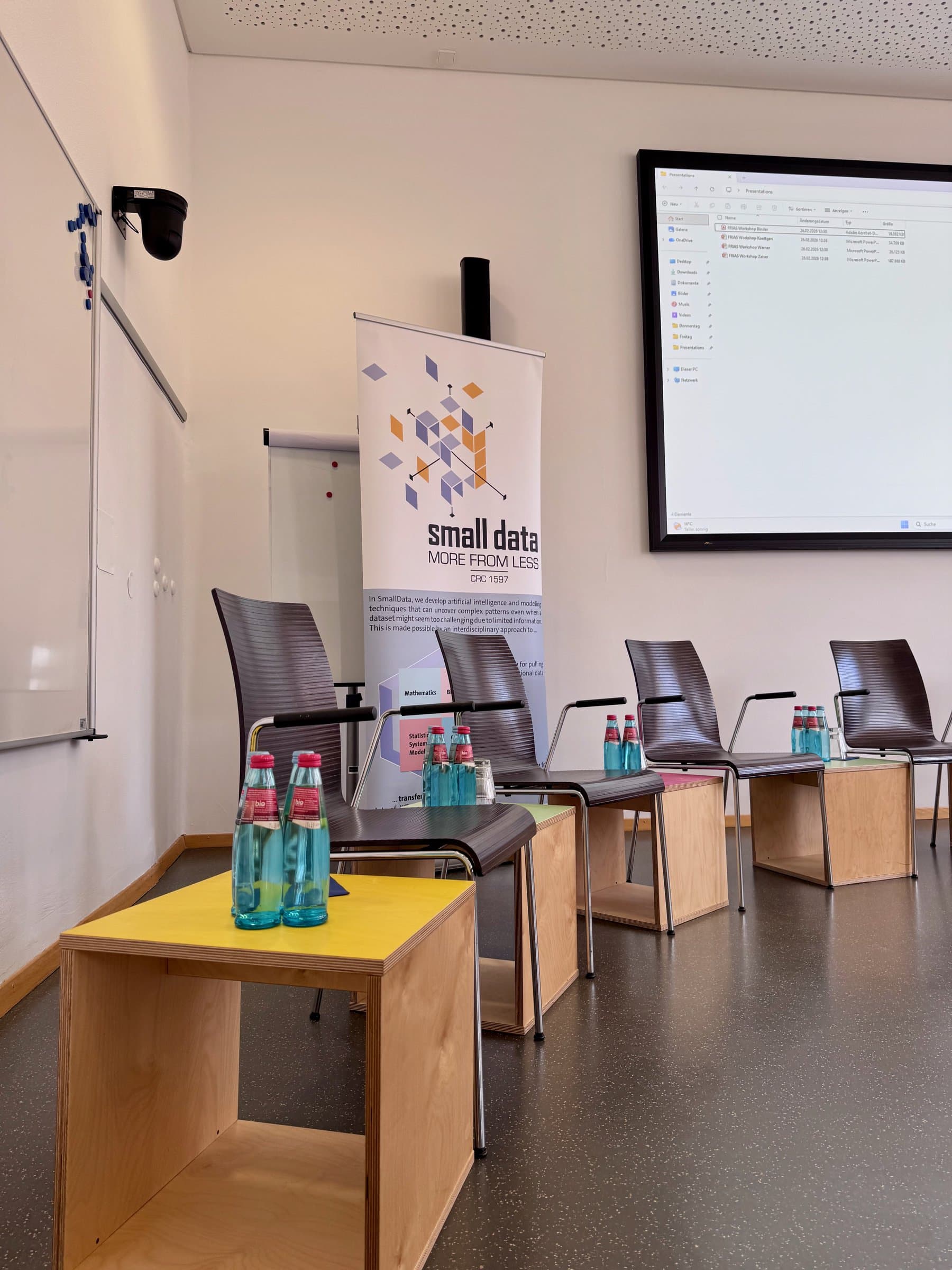
A panel discussion moderated by Stefan Rensing (Vice Rector, Research and Innovation) then brought these perspectives together. Panelists discussed recurring tensions in interdisciplinary work: different publication cultures, different timelines, and different definitions of impact. Several strategies emerged as especially important:
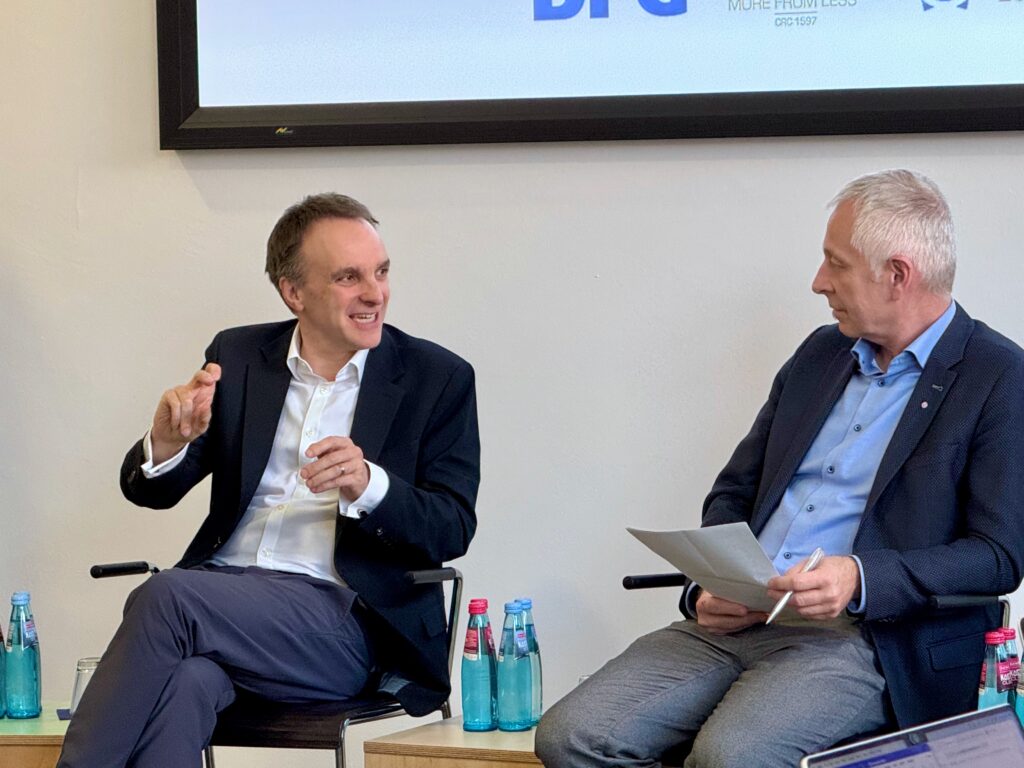
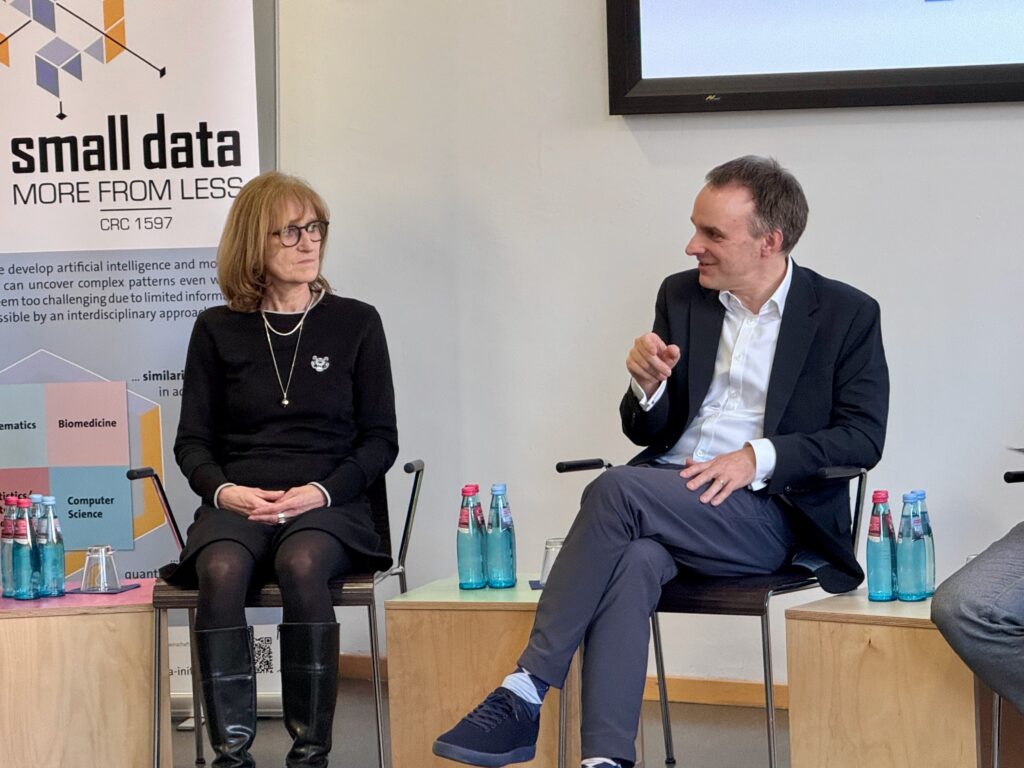
Following the talks and panel, participants continued discussions in a “Meet the Speaker” session, with opportunities for direct exchange with the speakers on consortium design, leadership, and interdisciplinary project development.
The event made clear that there is no single blueprint for interdisciplinary excellence. But there are repeatable practices: transparent structures, deliberate communication, meaningful opportunities for exchange, and a strong culture of mutual respect. Together, these are what turn disciplinary diversity into scientific progress.
We thank all speakers and participants for their thoughtful contributions and active engagement.
Institute of Medical Biometry and Statistics,
Faculty of Medicine and Medical Center –
University of Freiburg