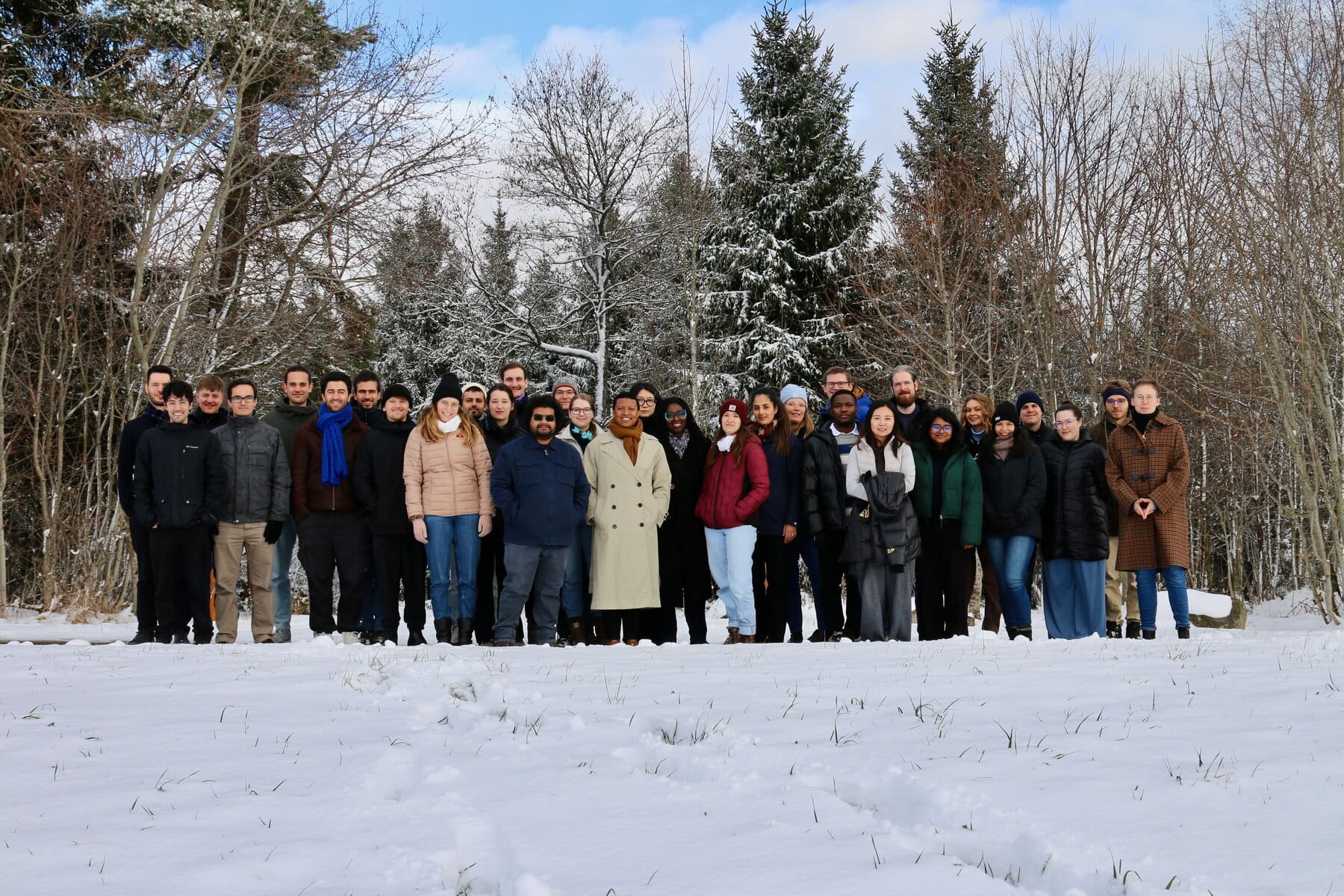
From November 19 to 21, our doctoral researchers met at the Schwarzwald Lodge Rothaus for the second SMART Retreat. The program followed the WCCD (Write/Code/Collab/Discuss) format established last year, combining focused project sessions with structured exchange and group activities.
Day 1: Opening Sessions, Ice Breaker, and External Speaker Panel
After the welcome plenary, participants joined the first WCCD sessions.
Day 1 included 14 pitches, with examples such as:
A Human Bingo activity served as an initial ice-breaker.
In the afternoon, the retreat hosted a panel discussion with five external speakers:
Academia & Industry
Each speaker introduced themselves and outlined aspects of their professional paths. Early-career researchers then participated in a Q&A session focused on career development, transitions across sectors, and challenges encountered in their roles.
A scientific wrap-up followed. The evening concluded with a PowerPoint karaoke session, where participants improvised presentations based on previously unseen slides.


Day 2: WCCD Sessions, Shared Discussions and A Walk Through the Local Landscape
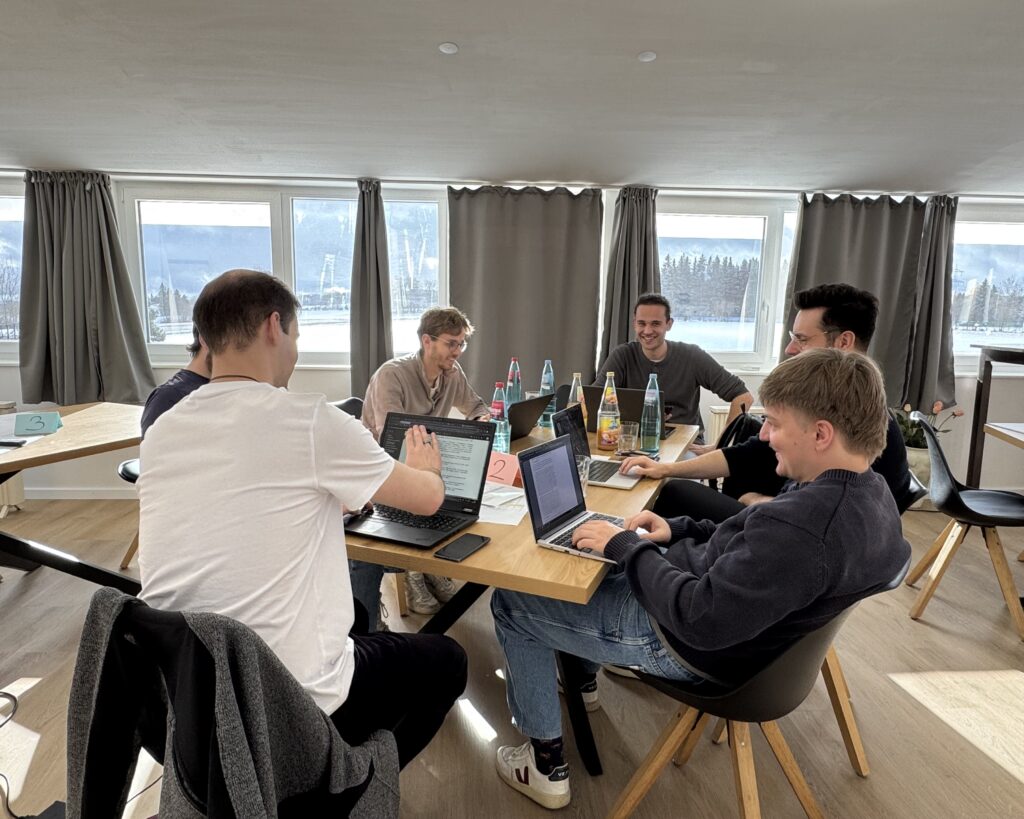
The second day continued with further WCCD sessions, enabling participants to carry forward their discussions and exchange insights across groups.
Day 2 included 9 pitches, covering topics such as:
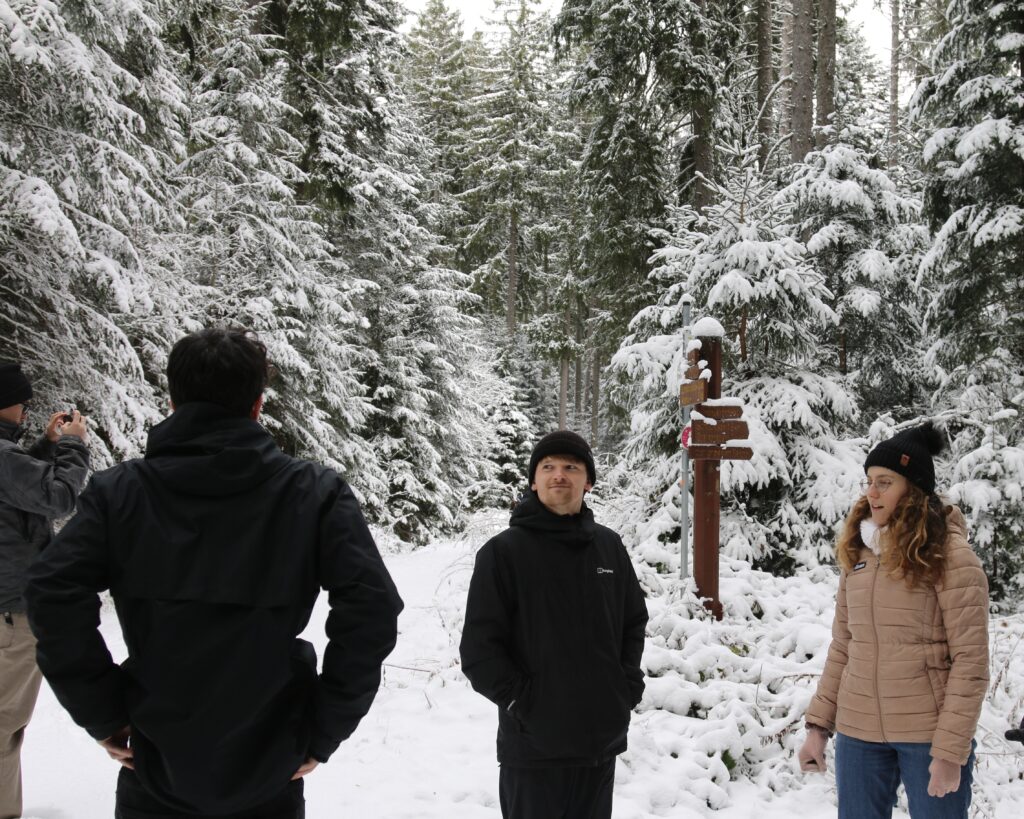
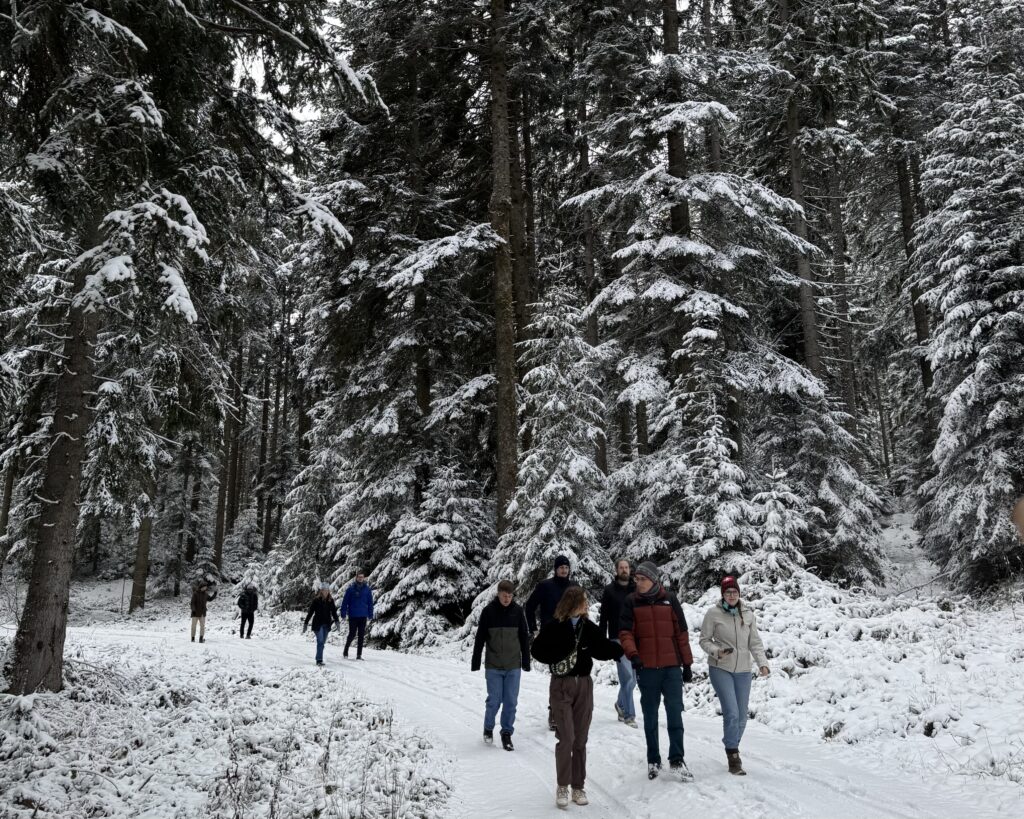
In the afternoon, participants joined a group hike around the Lodge Rothaus, following forest paths to a nearby lake. The hike provided time for informal conversations and cross-project exchange in a setting outside the usual work environment.
The evening program included a winter grill, followed by the scientific wrap-up featuring a pub quiz with interdisciplinary questions.
Day 3: Final Sessions, Feedback, and Forward Planning
The final day started with a plenary session summarizing the retreat’s progress and a brainstorm session to collect suggestions for next year’s retreat, after which participants continued with the final WCCD rounds.
The final day featured 12 pitches, covering coding, writing, and collaborative discussions. Examples included:
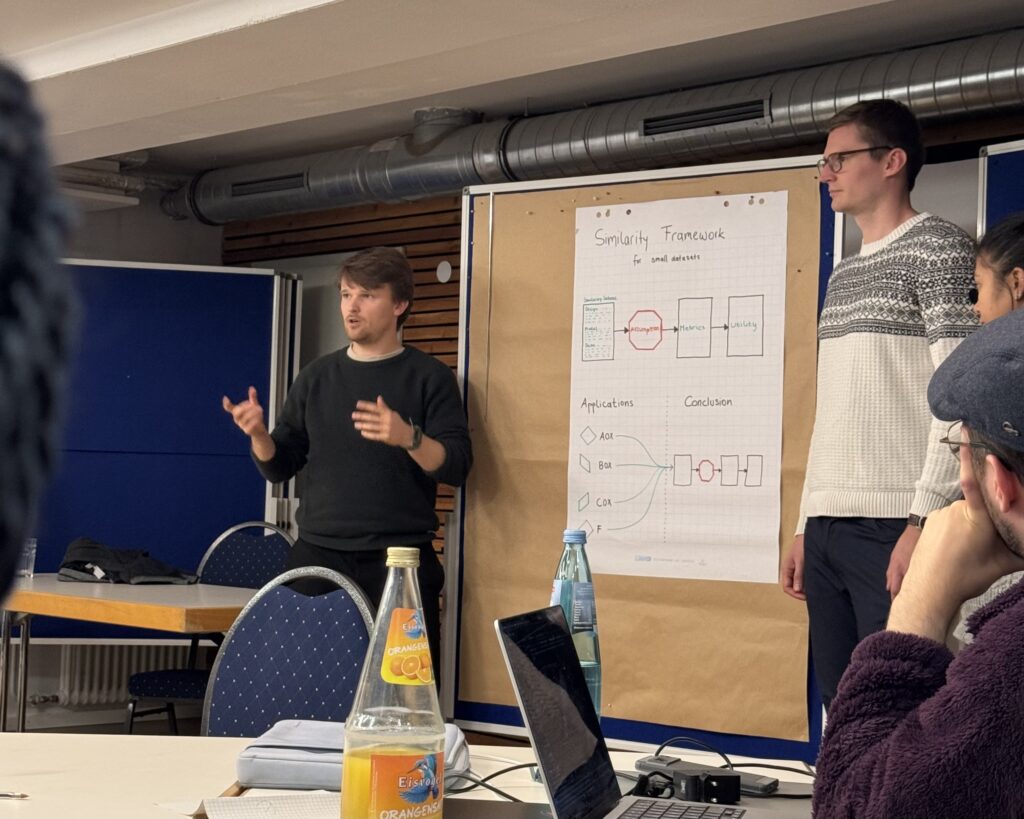
The afternoon included a “Posters from tomorrow” session, where participants presented in pairs or trios. These presentations outlined ideas for upcoming collaborative work, identified problems and potential solutions from a joint perspective, and proposed next steps that could be developed across projects.
A closing plenary concluded the retreat, summarizing outcomes, gathering structured feedback through a survey, and identifying priorities for the next retreat.

Acknowledgements
We thank the Deutsche Forschungsgemeinschaft (DFG) for funding the retreat and the Schwarzwald Lodge Rothaus for hosting the group. We also thank the organising committee (Fabian Kabus, Jelena Bratulic, Hannah Habenicht, Carola Heinzel and Lennart Purucker) for their input, and extend special thanks to Johannes Hog, Max Behrens, Julia Hindel and Leonhard Sommer for their contributions to the activities. We further thank all speakers and participants for their engagement across the three days.

Institute of Medical Biometry and Statistics,
Faculty of Medicine and Medical Center –
University of Freiburg