On Friday, December 12, 2025, the Medical Faculty of the University of Freiburg hosted Research Day 2025: “Shaping the Future of Research in Life Sciences and Medicine: Research Areas of the Faculty of Medicine”, organized by a multidisciplinary committee including our PI Anna Köttgen.
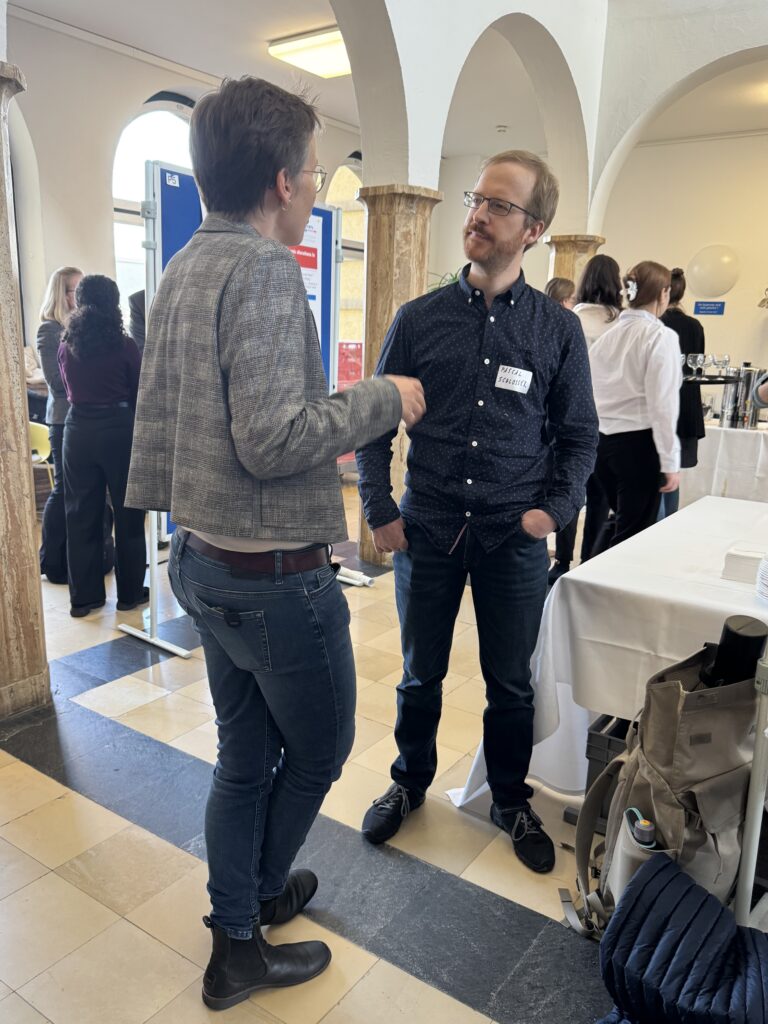
The event brought together scientists from across the Freiburg area to present current projects, connect with local researchers, and attend lectures from leading experts in biomedical research.
Members of CRC 1597 Small Data showcased their work during Session 2: “Medical Data Sciences”, moderated by our Associated Researcher Janis Nolde. The session opened with a talk by our Associated Researcher Heinz Wiendl, “Compartment-Specific Phenotyping: Novel Approaches to Understand Complex Neuroinflammatory Diseases.” He highlighted the importance of data science for characterizing neuroinflammatory diseases based on inflammatory signals across different tissues and compartments, such as the bloodstream, cerebrospinal fluid, meninges, brain tissue, and lymph nodes, with the aim of supporting diagnostic efforts.
Next, our SmallData Speaker Harald Binder presented “Small Data in the Context of Biomedical Knowledge and Foundation Models.” He discussed how foundation models can integrate information across multiple layers of data, e.g. through large language models, which allow users to interact with their datasets in plain written language. He also showed how for training foundation models CRC 1597 Small Data researchers have developed highly successful synthetic dataapproaches.
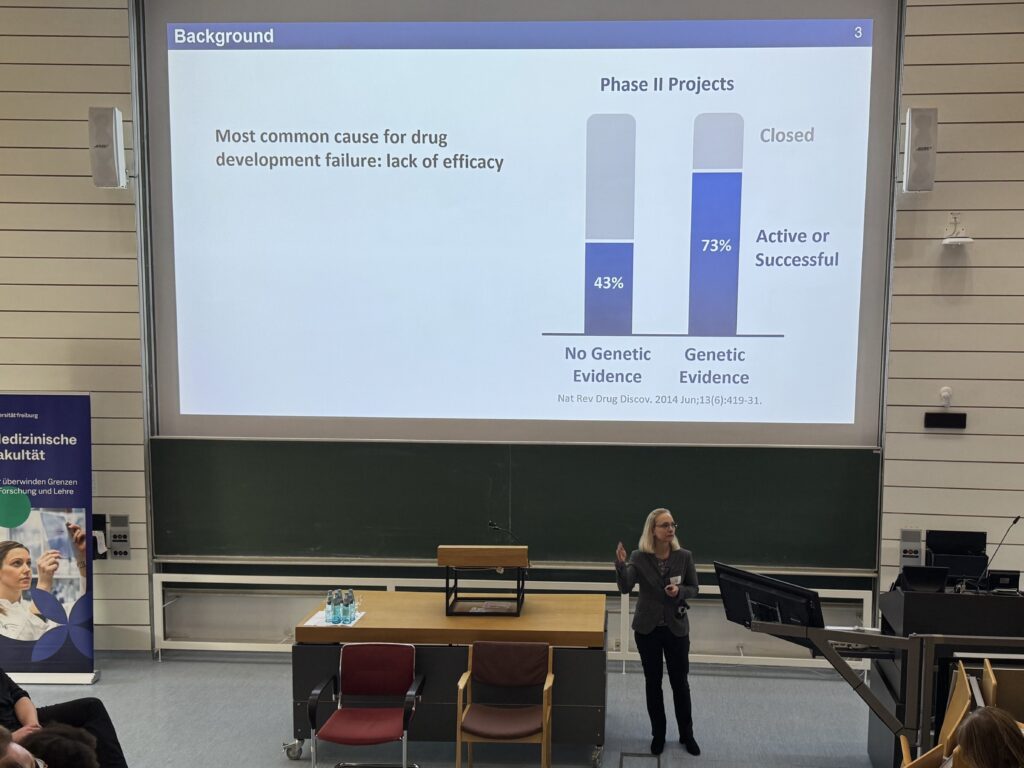
Our PI Anna Köttgen then followed with “The SFB 1453: Research in NephroGenetics,” highlighting the work of the Collaborative Research Center NephGen (SFB 1453), where she also serves as the speaker.
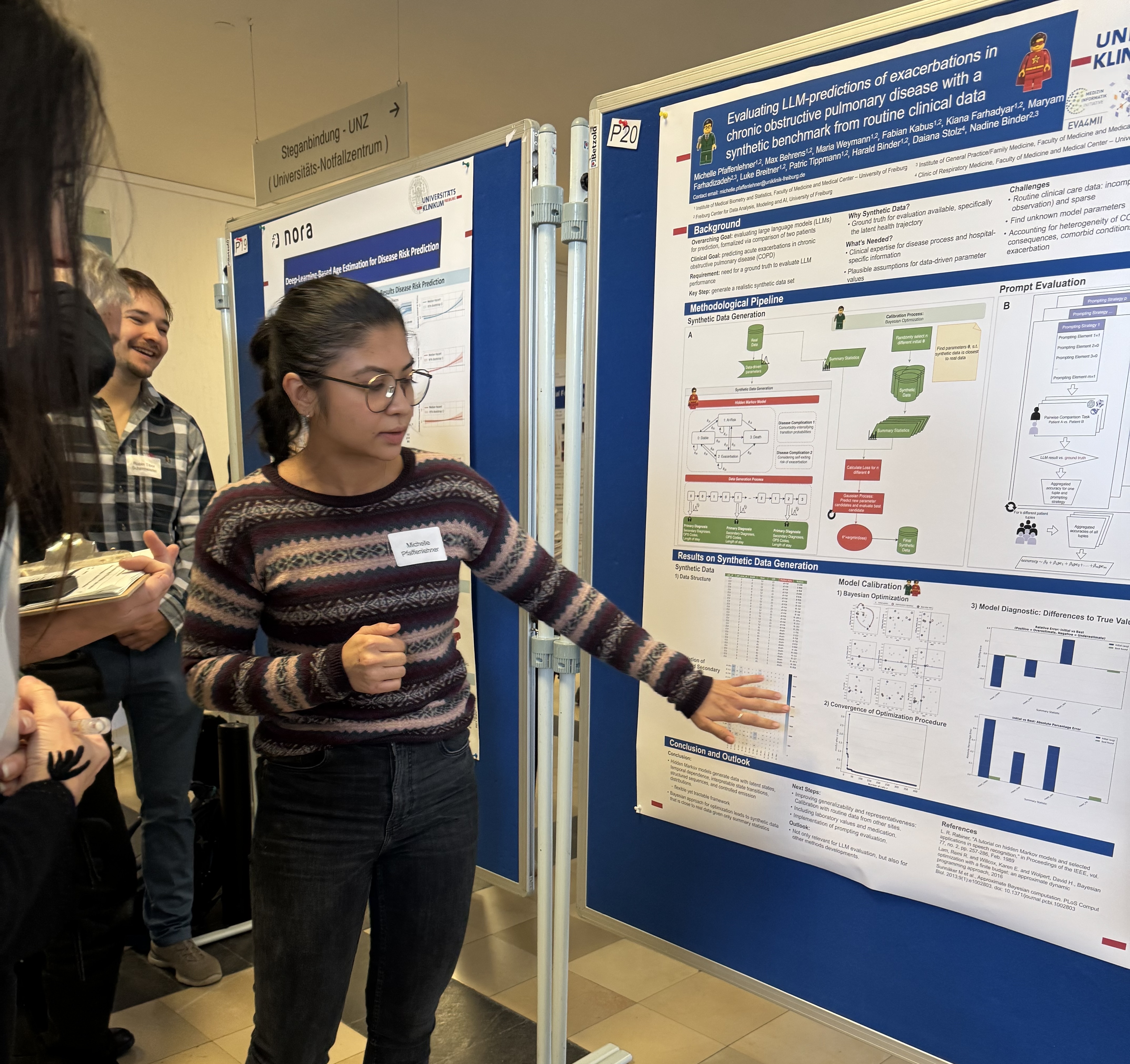
Junior scientists also contributed during the poster sessions. Our associated early career researcher Michelle Pfaffenlehner presented her collaborative work titled “Evaluating LLM predictions of exacerbations in chronic obstructive pulmonary disease with a synthetic benchmark from routine clinical data,” co-authored by our doctoral researchers Maryam Farhadizadeh, Max Behrens, and Fabian Kabus, along with our associated researcher Daiana Stolz, and our PIs Harald Binder and Nadine Binder.
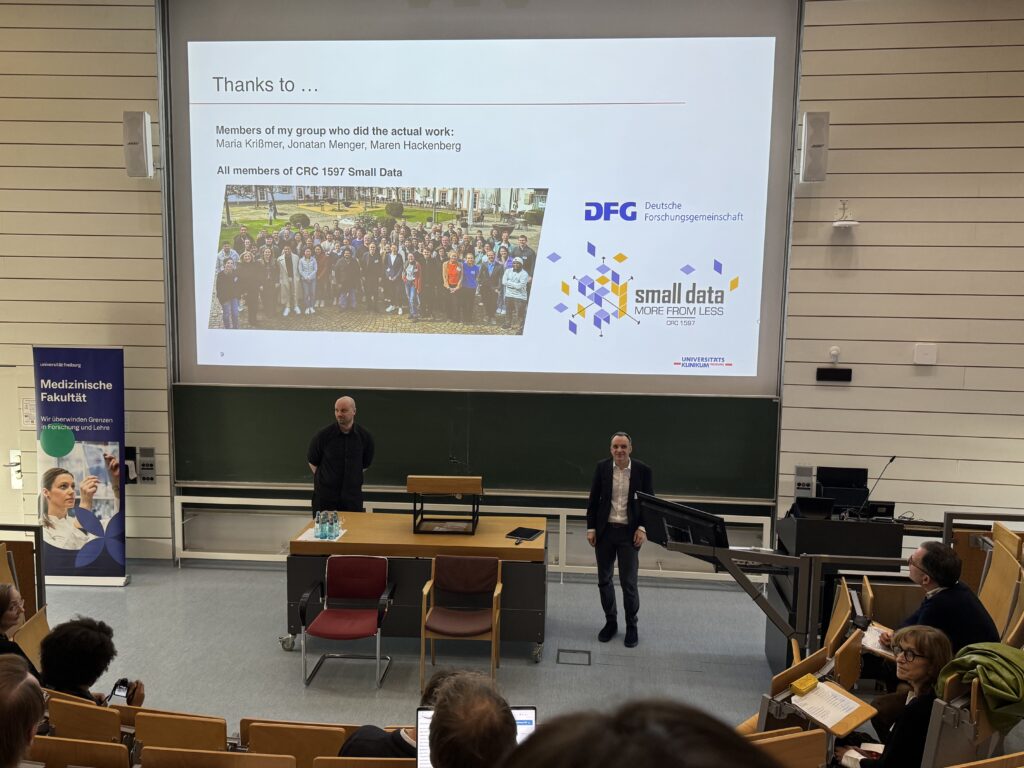
We’re very grateful to all our members for their contributions and for helping make Research Day 2025 such a fruitful scientific experience.
Institute of Medical Biometry and Statistics,
Faculty of Medicine and Medical Center –
University of Freiburg