How can academics use large language models in writing without giving up originality, rigor, or accountability?
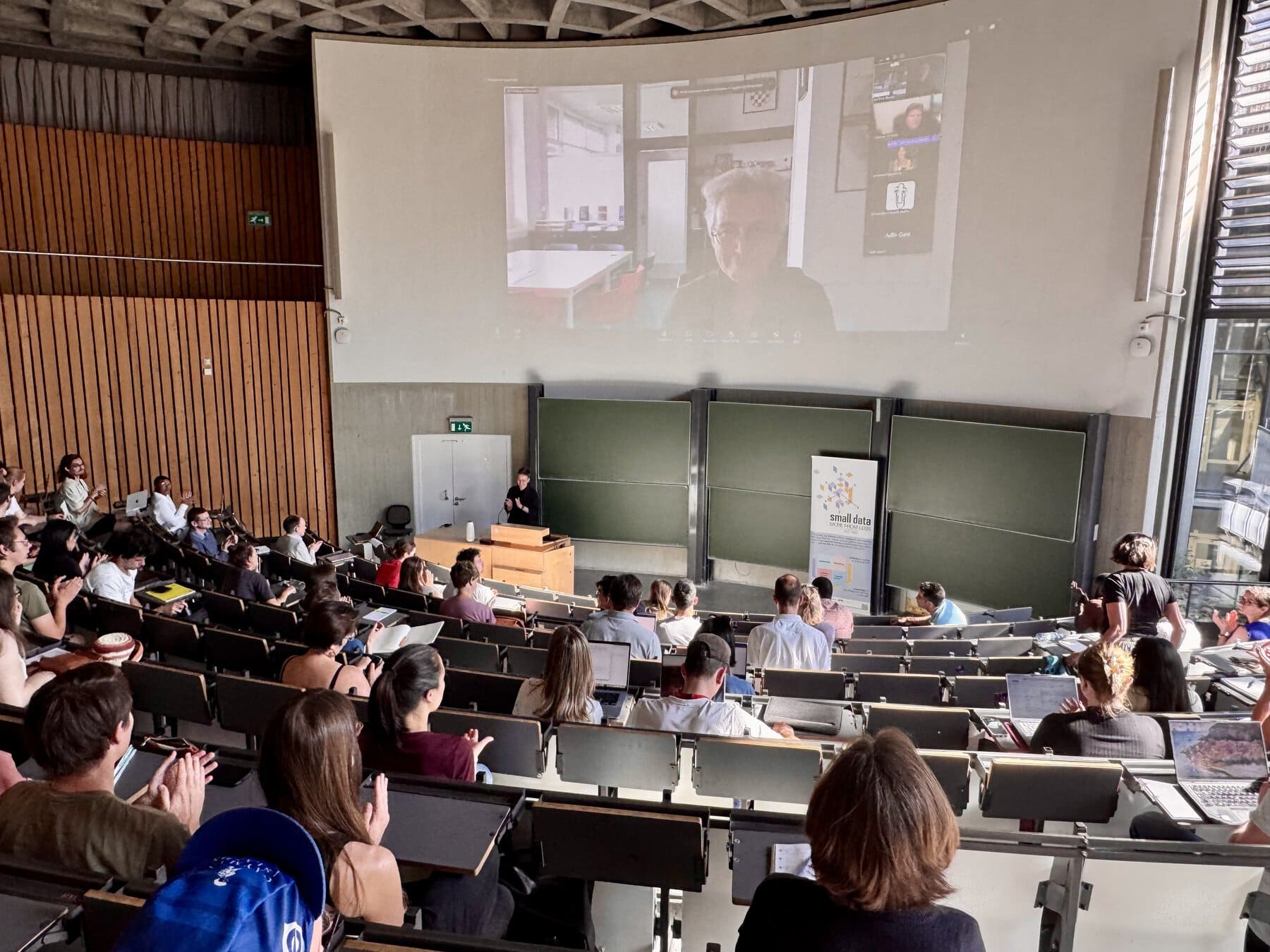
This was the central question at the workshop “Responsible Use of LLMs in Academic Writing”, held on Monday, July 20, 2026, at the Hörsaal Rundbau in Freiburg. The event brought together perspectives from dissertation research, manuscript preparation, scholarly publishing, and mathematical applications.
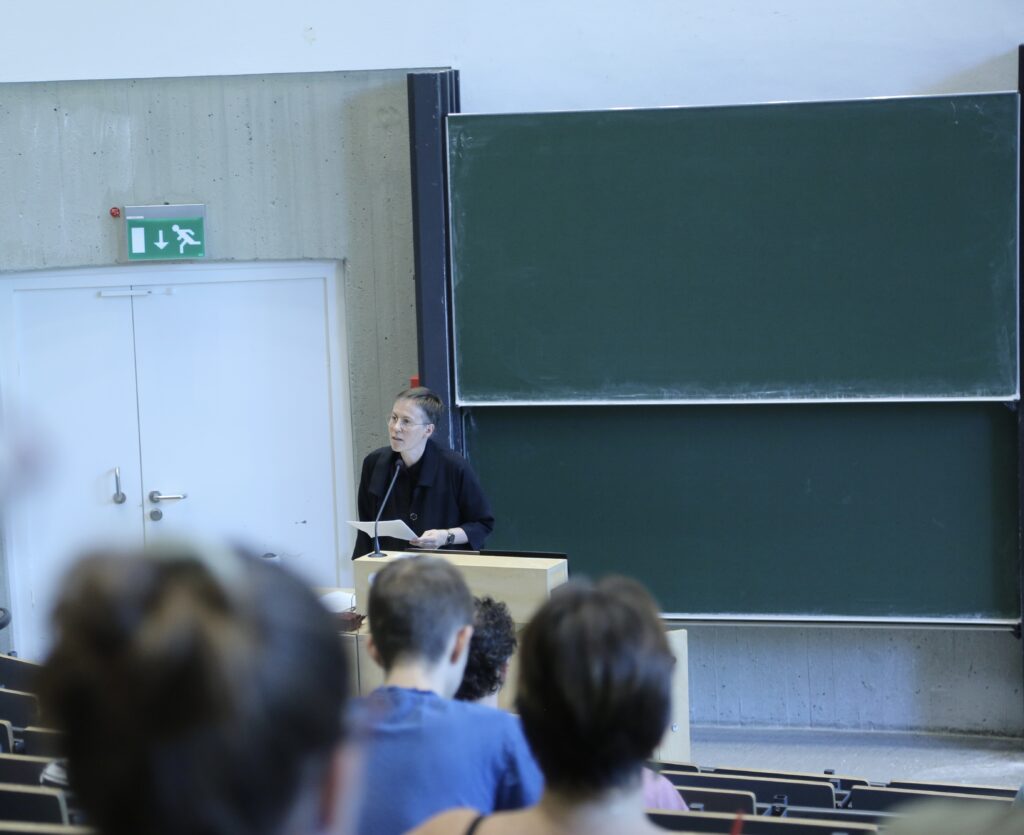
The workshop opened with welcome remarks by Nadine Binder, SMART PI at SmallData, and Stefan Rensing, Vice Rector for Research and Innovation at the University of Freiburg. Nadine Binder reminded participants that academic writing is part of the collective memory of science: it makes knowledge reproducible, open to scrutiny, and available for others to understand, challenge, and build upon. This is why large language models are such revolutionary tools in modern academic life. They influence how scientific texts are created, how arguments are structured, and how knowledge is communicated.
Stefan Rensing placed the discussion in the context of the University of Freiburg’s policy on the use of AI in research. He highlighted three key pillars: transparency, authorship responsibility remaining with natural persons, and evolving standards for disclosure, including in relation to DFG guidelines for grant applications.
Across the afternoon, one message was consistent: AI can support academic writing, but it cannot replace the researcher’s obligation to understand, verify, and stand behind the work.
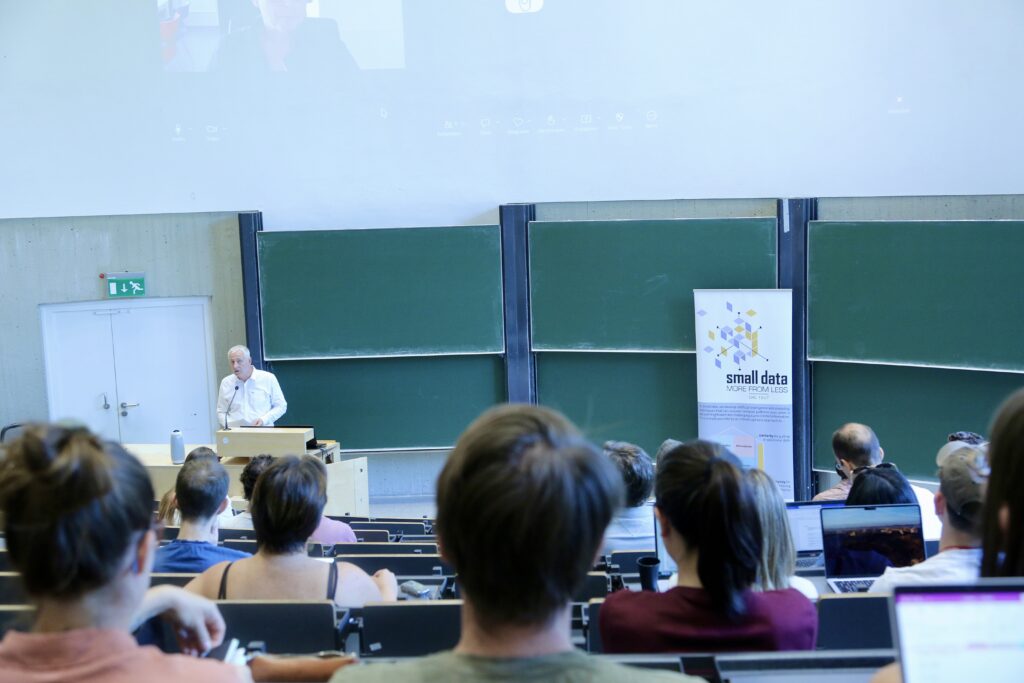
Daniel Edmund O’Leary, from the Marshall School of Business at the University of Southern California, opened the speaker program with a talk on AI use in dissertation research and academic learning. He emphasized that researchers need to know the relevant university, journal, and team policies that apply to their work. His talk also returned to a more fundamental point: writing is thinking. If doctoral researchers outsource too much of the first draft, they may gain efficiency while losing the deliberate practice through which scientific judgment is formed. At the same time, Daniel showed that LLMs can be useful when used deliberately: for testing alternative perspectives, supporting critical thinking, searching across bodies of knowledge, and creating conceptual visualizations.
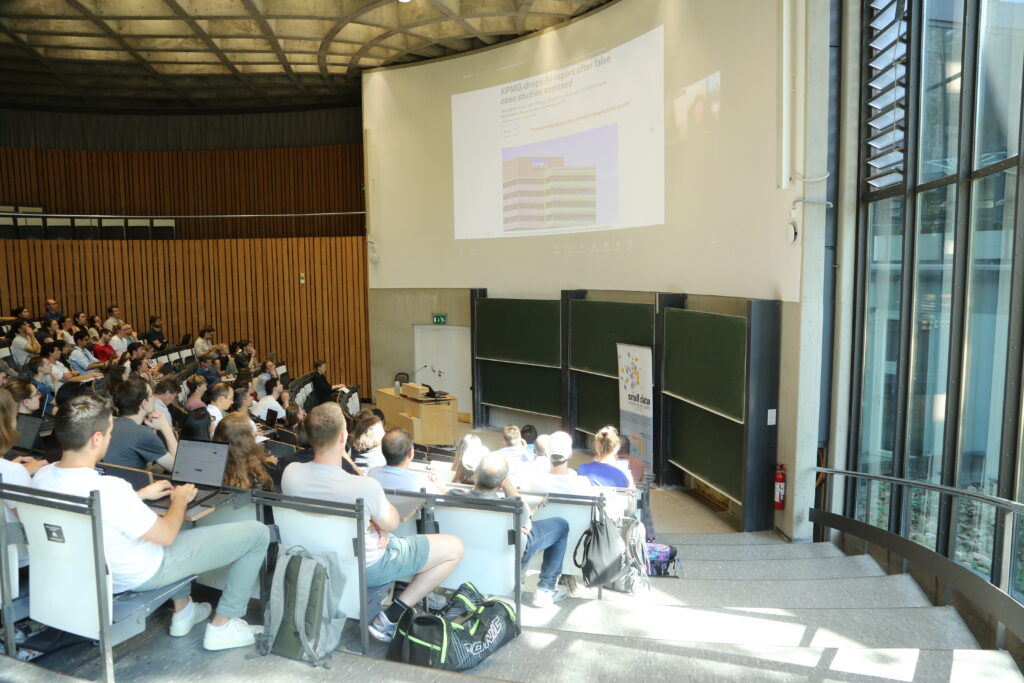
Antonija Mijatović, from the School of Medicine at the University of Split, brought a practical perspective to manuscript preparation. She showed how LLMs can support different stages of writing, from clarifying a research question and organizing ideas to improving structure, refining language, checking consistency, and preparing a manuscript for submission. Her key point was that responsible AI use is also a workflow question. LLMs may help researchers move from rough notes to a clearer draft, but their outputs still need to be checked against the literature, the data, the intended argument, and the journal’s requirements.
Ana Marušić, also from the School of Medicine at the University of Split, widened the lens to scholarly publishing and research integrity. Scientific journals depend on trust in authorship, peer review, citations, images, data, and editorial standards. AI is entering a publishing system already under pressure from plagiarism, duplicate submissions, paper mills, peer-review manipulation, citation manipulation, and fake stakeholders. Ana noted that AI can support editorial workflows and integrity checks, but it can also make low-quality or fraudulent content easier to produce at scale. Current guidance generally agrees that AI tools cannot be listed as authors, authors remain accountable for the final work, and AI use must be handled transparently. However, disclosure practices are still evolving across journals and disciplines.
Peter Pfaffelhuber, from the Department of Mathematical Stochastics at the University of Freiburg, closed with a field-specific problem: mathematics does not fit neatly into the usual distinction between language assistance and research contribution. In many sciences, writing is what reports the work. In mathematics, the proof is the work. This makes the question “Did AI only help with the writing?” much harder to answer. Peter connected this challenge to the Leiden Declaration on Artificial Intelligence and Mathematics, published in June 2026, and emphasized the importance of disclosure, responsibility, and verifiability. In a time when plausible arguments are becoming easier to generate, computer-checkable proof systems such as Lean may become an important source of trust.
Several practical principles emerged from the workshop:
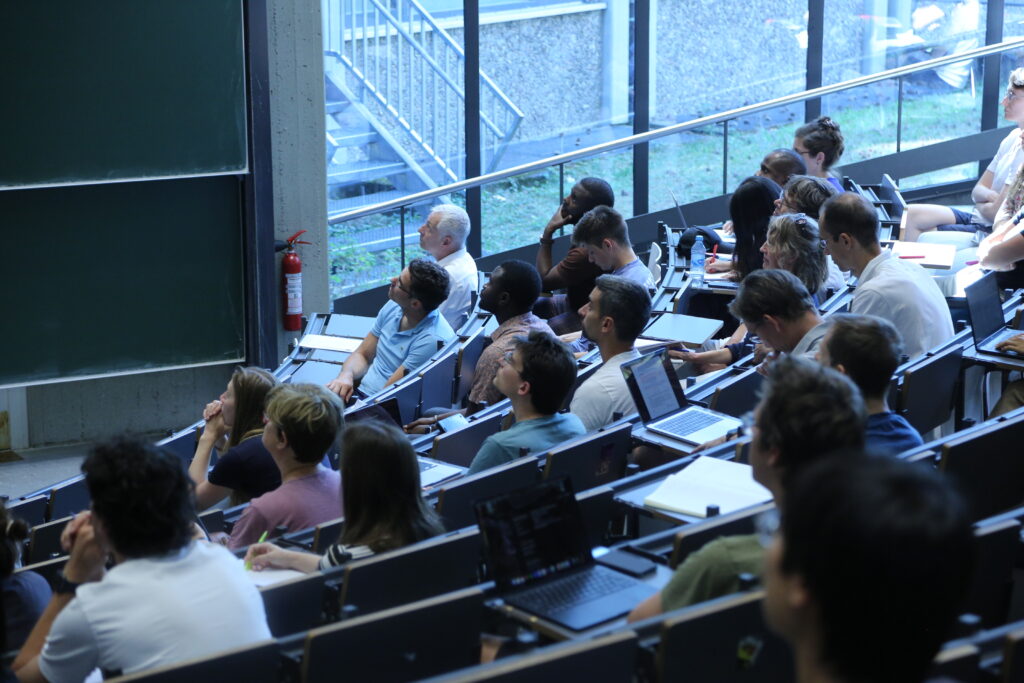
The workshop ended with a constructive message: LLMs are now part of academic writing, and their role will continue to evolve. Used carefully, they can support learning, editing, perspective-taking, and research workflows. Used carelessly, they can weaken judgment, obscure authorship, amplify errors, and erode trust. Responsible use means keeping the benefits in view while preserving what academic writing is for: making knowledge clear, credible, transparent, reproducible, and accountable.
We thank the speakers Daniel Edmund O’Leary, Antonija Mijatović, Ana Marušić, and Peter Pfaffelhuber, as well as Stefan Rensing and Nadine Binder for opening the event. We also thank all participants for contributing to a timely discussion on research integrity and the future of academic communication.
If you would like to have the slides from the speakers please reach us:
Institute of Medical Biometry and Statistics,
Faculty of Medicine and Medical Center –
University of Freiburg